
Business Video Production Made for Small Business Success
Most small businesses don’t need “more content”, they need clarity. What you do, who it’s for, what makes you a safe choice, and what someone should do next. That’s why the right business video ideas matter, video can carry the message faster than a long page of text, but only if you pick the right type of video and make it with a plan.
If you’re reading this because you’re thinking “we probably need to get someone in to film this properly”, start here, video for small business. If you want a simple overview of what to make, where to place it, and how to get it doing a job, use using video for business.
This page is a practical run through of nine business video ideas that can help a small business, not vague theory. Each one is tied to a real use case, things like turning website visitors into enquiries, making your service feel less of a leap, supporting offers and launches, and giving you assets you can actually reuse.
We’ve also got two genuinely useful resources if you want to go one step further, without overthinking it:
- Why Having a Video Marketing Strategy is Essential for Every Small Business. Download our FREE Video Marketing Strategy Blueprint to clarify what you need to do to get video to boost your business.
- If you’re wondering what to make first, and what each type of video actually does, start here: business video marketing.
1. Introduce Your Business and Explain What You Do
The most useful videos are often the simplest. A short intro video on your homepage can do a lot of heavy lifting, it shows who you are, what you do, and the problem you solve, without making people work for it. In practice, this is often your company profile video, just kept short and focused.
When someone lands on your website for the first time, they’re usually trying to answer three questions:
- What does this business do?
- Can they help with what I need?
- Why choose them, rather than someone else?

A good intro video answers those quickly, usually in under 60 to 90 seconds. It’s not just “more engaging than text”, it’s that people can see your face, hear your voice, and get a feel for how you work. That does something written copy can’t always do, it speeds up trust.
It also helps people stay on the page long enough to understand what you actually offer, especially if what you do is slightly specialist, or hard to explain in a headline.
Here are a few examples of how this can look in the real world:
- A boutique florist in London might show a quick montage of arrangements being made, delivery prep, and the shop front, while the owner explains what makes their service different, for example bespoke work, same day delivery, or event florals.
- A small consultancy firm could combine a short piece to camera with natural footage of the team working, a workshop moment, a client meeting (even staged lightly, if confidentiality matters), and a simple explanation of who they help and what results look like.
- A fitness studio might use class footage, warm instructor voice, and a quick nod to the vibe, beginner friendly, high energy, or supportive and calm, so the right people feel like they belong there.
To keep an introductory video clear (and not awkward), aim to include:
- A warm opening: a simple hello, a line that names the viewer’s situation, or a quick “here’s what we do”.
- A plain-English explanation: what you do, who it’s for, and what changes for the customer.
- Real visuals: your space, your people, your product, your process, the things that make it feel believable.
- A next step: what you want them to do after watching, call, enquire, book, or view a specific page.
Done well, this becomes your “first handshake” video. It can sit on the homepage, be reused on your socials, and it often becomes the thing people reference when they finally get in touch, “I watched your video and it felt like you knew what you were doing”.
Your customers are your most believable advocates, and customer testimonial videos are one of the quickest ways to build trust with people who don’t know you yet. When someone can see and hear a real person explaining what changed, it lands in a different way to a claim on a homepage.
If you want this filmed properly, and you want it to feel natural rather than staged, this is the next step: testimonial video production.
Written reviews can be brilliant, but business video ideas like testimonials add tone, warmth, and context. They also help people picture themselves in the same situation, which is usually what they’re doing when they’re comparing options.
For example, a local café might feature a regular customer explaining why they come back each week, not just “the coffee is nice”, but the atmosphere, the welcome, the little routine it’s become. A small accounting firm could film a client explaining how they stopped feeling behind all the time and finally got their finances organised. It’s still simple, it just feels real.
When creating video testimonials, follow these tips to make them effective:
- Focus on authenticity: encourage customers to speak naturally about their experience, rather than trying to “perform” a review.
- Guide the narrative: ask clear, simple questions such as:
- What problem were you facing before working with us?
- What changed once we got involved?
- What result are you most happy about, in practical terms?
- Use real visuals: pair the testimonial with good footage of the customer using the product, being in the space, or interacting with the service, it stops the video feeling static.
- Keep it concise: one to two minutes is usually plenty for a main testimonial, then you can cut shorter versions for social.
Testimonials work well on your website, in follow up emails, and as short clips on social. If you’re trying to keep spend sensible, you’ll get more value when you decide where they’ll be used before filming, small business video marketing goes into that in plain English.
3. Educate Your Audience with Expert Insights
One of the most effective ways to establish authority in your industry is by creating educational videos. Educational video production helps your audience by answering their questions, simplifying complex topics, and sharing valuable insights. This type of content positions your business as a trusted expert, building credibility and lasting relationships with customers.
Educational videos work for almost any industry. Whether you provide a service, sell products, or solve common problems, this content allows you to connect with your audience while offering practical value. A case study video is often the simplest bridge between education and proof, because it shows the result and the process.
For example:
- A financial adviser in Manchester could produce a short series of videos titled “5 Ways to Save for Retirement” or “How Small Businesses Can Improve Cash Flow.” These videos address real customer concerns while showcasing the adviser’s expertise.
- A garden centre in Surrey might create seasonal videos such as “How to Prepare Your Garden for Spring” or “The Best Plants for a Shaded Area,” helping homeowners with practical, hands-on advice.
- A plumbing company in Birmingham could release videos like “How to Fix a Leaky Tap” or “Signs You Need Boiler Servicing,” positioning themselves as approachable, knowledgeable professionals ready to help.
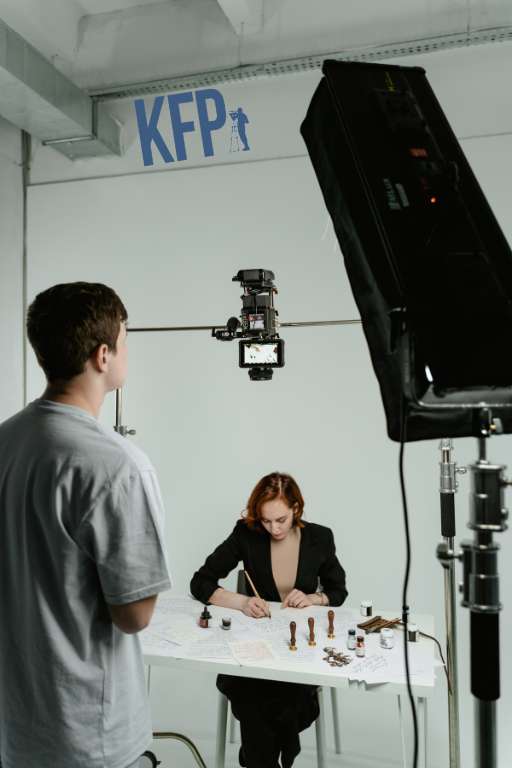
Effective educational videos typically include:
- A clear focus: Address a specific question or topic your audience cares about.
- Simple, easy-to-follow explanations: Break down complex ideas into short, understandable steps.
- Visual demonstrations: Show the process or solution alongside your explanation to make learning easier.
- Personality and authenticity: Be friendly and approachable, ensuring your video reflects your brand’s tone and values.
These business video ideas work well across multiple platforms, including your website, YouTube, and social media channels. By creating consistent, high quality educational content through small business video production, you can attract a wider audience, boost engagement, and position your business as a go to source for expert advice.
4. Showcase Your Business Culture
Culture is one of those things you can’t really fake, and you can’t explain properly in a paragraph on an About page either. But you can show it. A culture focused video isn’t about being quirky for the sake of it, it’s about letting people see how you work, how you treat people, and what “good” looks like in your world. A behind the scenes video is often the easiest way to do that without forcing it.
This matters more than most small businesses realise. People aren’t only buying the product, they’re buying the experience of dealing with you. If you’re the sort of team that’s calm, organised, and genuinely caring, a short film can communicate that faster than any claim ever could.
Here are a few ways UK businesses often use culture videos without it turning into cringe:
- A family owned bakery in Newcastle filming the early morning routine, the prep, the pace, the pride, and the small human moments that make it feel warm and real.
- A tech company in Manchester showing how the team actually collaborates, quick stand ups, whiteboards, problem solving, then a few short lines from two or three people about what they enjoy doing.
- A pet grooming business in Sheffield showing gentleness and handling, calm dogs, careful clips, clean workspaces, it reassures people straight away that their dog will be treated properly.
If you want this type of film to land well, keep the structure simple. A few ideas that tend to work:
- Behind the scenes, showing the real day to day, the standard, the care, the rhythm.
- Team introductions, short, natural, and specific, what they do, what they look after, what they care about.
- Small milestones, anniversaries, community work, training days, anything that quietly shows what you value.
- Light moments, not forced comedy, just the human bits that make your business feel like people, not a faceless brand.
Culture videos tend to perform well on social because they feel human, but they’re also useful on your website, especially on About pages, recruitment pages, and anywhere a customer might be deciding whether you feel trustworthy. The key is to film it in a way that gives you more than one use, a full version for the site, and a few short clips you can reuse on social without it feeling forced.
5. Tell Your Origin Story
Your origin story is one of the simplest business video ideas that still has real weight. Not because it’s dramatic, but because it explains why you do what you do, and why you care enough to do it properly.
For a small business, this kind of film can do a job that a standard About page struggles to do. It puts a person behind the work, it makes the values feel real, and it gives customers a sense of what they’re supporting when they choose you.
For example:
- A family run bakery in York could share its journey from a home kitchen to a busy shop. A mix of old photos, real footage of the morning prep, and a few simple lines from the people doing the work is often more than enough.

“From our family kitchen to your table, every loaf carries a bit of tradition, care, and community.”
- A craft brewery in Bristol could show the reality, the small batch process, the quality checks, the people, then finish with customers enjoying the end result. It feels grounded, not performative.
- A boutique consultancy in Manchester might tell the story of how it started, the type of problems it exists to solve, and the moments that proved the work mattered. Not “look at us”, more “here’s why we take this seriously”.
Here’s what to focus on when you plan an origin story video:
- The beginning, what sparked it, what did you see, or what did you want to do differently?
- The journey, one or two turning points, not a full biography, just the moments that shaped the business.
- The people, a few real faces, and a sense of how you work together.
- The future, a simple line about what you’re building towards, so it ends with momentum.
Origin story videos work well on an About page, but they’re also useful as pinned social content and in follow up emails when someone is still deciding. If you’re collecting business video ideas and you want this to land as a proper trust building film, promotional videos for business is the most direct route.
6. Turn Blog Content into Engaging Video Blogs (Vlogs)
If you already write blog posts for your website, turning a few of them into short videos is one of the easiest ways to get more mileage out of the thinking you’ve already done. It also catches the people who never read long pages, they want the quick version, from a real person, with a bit of clarity.
This is where “business video ideas” stops being an abstract brainstorm and becomes a practical workflow. You take one useful topic, simplify it, record it cleanly, and publish it in places where people actually scroll, YouTube, LinkedIn, Instagram, your own site.
For example:
- A local accountant in London could turn a post like “5 Things to Sort Before Tax Year End” into a three minute video, with a simple structure and a clear next step for viewers.
- A garden centre in Surrey could turn seasonal posts into short “do this now” clips, planting, pruning, pest control, the kind of thing people search for when they’re already standing in the garden.
- An e-commerce shop selling sustainable products could turn a popular post into a quick demo or comparison video, showing the product in use rather than just describing it.
Here’s how to make these videos watchable, rather than another bit of content you upload once and forget.
- Pick posts that answer a real question. “How to”, “what to do first”, “what to avoid”, and “what it costs” style topics usually work best.
- Turn the post into a simple spoken outline, not a script you read word for word. A strong structure is enough, problem, a few steps, one clear takeaway.
- Keep the pacing tight. Two to five minutes is a good range for most small business topics, long enough to be useful, short enough that people finish it.
- Make the visuals do some work. Even a talking head video becomes more engaging when you cut in a few relevant shots, the product, the space, the process, or a screen demo.
- Make it easy to follow without sound. Use captions, and keep your key points simple enough that a viewer can track the logic even while scrolling.
Vlogs are versatile, and they’re one of the simplest business video ideas to build into your marketing without overcomplicating it. You can publish the full version on YouTube, embed it on the matching blog post, then cut it into two or three shorter clips for social. You can also drop a clip into an email, which is often an underrated place for video, because people are already in “decision mode” when they’re reading.
If you want these to look and sound professional, the main difference is rarely “fancy editing”. It’s clean audio, good lighting, and a bit of direction so the video has shape. That’s where a proper filming setup helps, especially if you want to build a consistent series rather than a one off.

And if you’re already thinking, “we need to do this properly, but we don’t want it to become a full time job”, that’s the point where it makes sense to look at video for small business and decide what a sensible first batch of videos would be.
7. Thank Your Customers
It sounds obvious, but a lot of small businesses never actually say thank you in a way people notice. A short video message does something an email rarely does, it lands. It feels human, and it reminds customers there are real people behind the service.
This is one of those “business video ideas” that can be simple and still work very well, because the point isn’t production value, it’s warmth, timing, and sincerity.
Here are a few practical ways it tends to show up:
- Seasonal thank you, an end of year message, or a post Christmas clip, with a few quick shots of the team and the place people recognise.
- Milestone moments, “we’ve been here a year”, “we’ve served 1,000 customers”, “we’ve moved”, “we’ve hired”, the kind of thing regulars genuinely like seeing.
- Supporter thanks, especially for community projects, charities, crowdfunders, or local events, where people want to feel the impact of what they’ve helped make happen.
If you’re planning one, keep it straightforward. A thank you video usually works best when it’s short, specific, and not trying too hard.
- Say who you’re thanking, and why, be concrete rather than generic.
- Keep it focused on them, not a sales pitch. If there’s a next step, make it soft.
- If you include visuals, use recognisable moments, your shop, your team, your work in action, your customers (with permission).
- Use captions, plenty of people will watch without sound.
These videos work nicely on social, in newsletters, and even on a simple “thank you” page after a purchase or booking. And if you’re already thinking about a wider set of videos, it helps to treat this as part of a small batch, rather than a one off, so you end up with footage you can actually reuse.
Done well, a thank you video doesn’t just “look nice”. It makes people feel noticed, and that’s often what keeps them coming back.
8. Promote Local Events or Partnerships
If you do anything local, markets, pop ups, collaborations, community events, video is one of the easiest “business video ideas” to put to work quickly. Not because it’s flashy, but because it captures atmosphere. People can feel it, and that’s what gets shared.
It also gives you something useful before, during, and after the event. A short clip to tell people it’s happening, a few moments that show it’s real, then a simple highlight reel you can use next time you run something similar.
If you want to keep it practical, think in three stages:
- Before, a quick “what, where, when” video so people actually turn up.
- During, real moments, people arriving, browsing, talking, trying things, the bits that prove it’s worth being there.
- After, a short recap that says “this happened”, and quietly makes the next one easier to promote.
Partnership videos work in a similar way. If you’re collaborating with another local business, or supporting a cause, filming a few grounded moments helps people understand what’s actually going on, rather than just seeing a logo on a poster.
A few simple shots usually do the job:
- People first, customers, visitors, volunteers, or attendees doing the thing, not just empty wide shots.
- Proof of involvement, your team interacting, explaining, helping, serving, setting up, whatever “shows the work”.
- A clear signpost, one line of context, either on screen text or a quick spoken line, so viewers know what they’re watching.
The payoff is long tail. A decent event recap becomes something you can reuse, on social, in newsletters, on a local landing page, even as background credibility on your homepage. It’s one of those business video ideas that keeps giving, as long as you don’t let the footage die in a folder.
9. Showcase Customer “How-To” and Product Demo Videos
Some of the best business video ideas are the ones that stop people hesitating. For a lot of small businesses, customers do not need more persuasion, they need clarity. They want to see how something works, what it looks like in real life, and whether it’s going to fit their situation.
That’s where how to videos and product demos earn their keep. They reduce “what if it’s not right for me” doubt, they answer the questions people would otherwise email you about, and they quietly make your product or service feel easier to buy.
These tend to work best when they’re grounded and specific, rather than glossy and vague. You are not trying to make a cinematic trailer. You are trying to show the thing being used properly.
For example:
- A home décor retailer could show how a few key items change a space, rather than listing features, a short “before and after” demo is often enough.
- A bike repair shop could film quick, calm tutorials like “how to fix a puncture” or “how to check your brakes”, useful for customers and good for search.
- A skincare brand could demonstrate application, texture, and routine placement, because that’s what people actually want to know before they commit.
To make these videos genuinely helpful, and not just “content”, a few simple rules usually get you there:
- Start with the outcome, tell viewers what they’ll be able to do by the end, or what problem this solves.
- Show the real steps, avoid jumping from step one to “and then it’s done”, the small details are what build trust.
- Keep the camera honest, well lit, steady, close enough to see what matters, and with clean sound if anyone is speaking.
- Make it easy to use, think about where it will live, product page, FAQ section, follow up email, or social clips, before you film.
One extra benefit people do not always clock at the start, these are “evergreen” business video ideas. A good demo can keep helping for months or years, especially if you update it when something changes, and it can reduce support time because customers get answers without having to ask.
If you sell something that needs explanation, or if customers tend to ask the same few questions before they buy, this is usually one of the best places to start.
How Kindfame Productions Can Help Your Small Business Grow with Business Video Ideas
You can do all of the above yourself, of course. Plenty of people do. The bit that usually trips businesses up is not effort, it’s getting the right footage for the right job, then shaping it into something that actually gets used, rather than sitting on a hard drive.
If you want these business video ideas to turn into usable assets, without the day becoming a circus, this is where we help. We keep it practical, we plan around your real world schedule, and we shoot with editing in mind so you get more than one finished piece.
Here’s what that looks like in practice:
- Intro and “what we do” videos, we help you say the right thing in plain English, then capture the visuals that prove it, so your homepage video feels confident, not performative.
- Testimonials that don’t feel awkward, we keep it relaxed, we ask sensible questions, and we film enough supporting footage so the final edit feels natural, not like someone is being put on the spot.
- Educational and how to content, we help you pick topics people actually search for, then film and edit in a way that makes the steps easy to follow, without turning it into a lecture.
- Culture and behind the scenes, we film around real work, not a staged version of work, so it builds trust properly, and it still looks good.
- Origin story and “why we exist”, if your story matters, and it usually does, we shape it so it lands with credibility and warmth, not hype.
- Repurposing content into video, if you already write posts or send newsletters, we can turn the strongest ideas into short videos, cut downs, and clips that suit the platforms you actually use.
- Customer appreciation and milestone videos, these are simple, but they work, we keep them sincere, and we make them easy to share across email and social.
- Local events and partnerships, we capture the energy without getting in the way, and we deliver a clean highlight edit you can use for follow ups, future promotions, and local credibility.
- Product demos and practical explainers, we film for clarity, close ups where they matter, clean sound, and an edit that answers the questions customers have before they buy.
Next Step If You Want This Done Properly
If this page has sparked ideas, the next question is usually the practical one, what should you make first, and how do you get footage that’s actually usable across your website and social, without it turning into a time sink.
If you want a done for you option, start here, video for small business. That page shows the simplest way to get moving, and it’ll help you use these business video ideas to work out which type of video is the best starting point.
When you message us, it helps if you include:
- What you’re trying to achieve, more enquiries, more trust, more sales, or just clearer positioning
- Where the video will live, homepage, service page, email follow up, social, ads
- Any deadlines, launches, events, seasonal promos, time sensitive offers
Ready when you are, use the contact page and tell us what you’ve got in mind.