
Event Video Marketing in the UK
Event video marketing has become one of the most useful tools for organisers who want to promote an event with video, without it turning into a huge production project. People expect to see what something feels like before they commit, and video does that quickly. It shows atmosphere, scale, credibility, and the little human moments that text alone struggles to land.
Imagine the energy of a packed conference room, the buzz around a festival stage, or the quieter warmth of a charity fundraiser. An event promo video can capture that in a way a flyer never will. Done well, it creates momentum before the event, makes the day itself feel more alive, and then keeps working afterwards when you need follow ups, future ticket sales, or sponsor value.
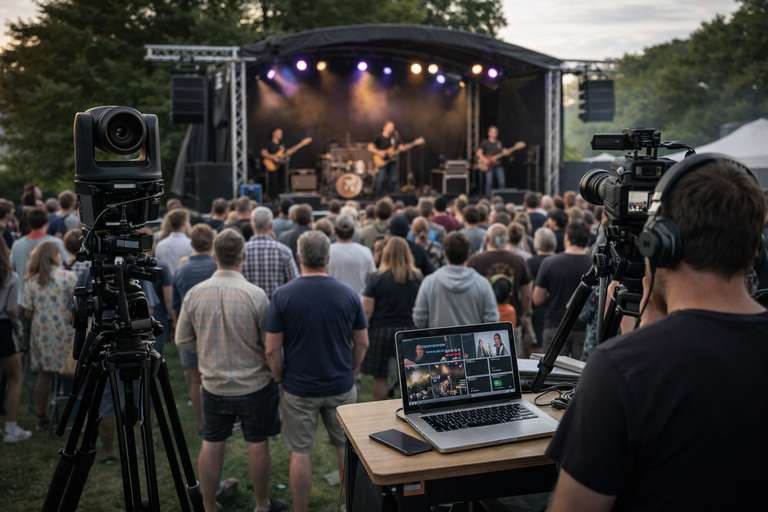
In this article, we’ll run through practical ways to use video at every stage of your event, with a simple event video content plan you can actually follow. If you want the filming and the stream handled properly, without it becoming stressful, start with our event video production and live event streaming page and work backwards from what you need on the day.
Building Anticipation: Pre-Event Video Marketing Strategies
Pre event content is where event video marketing really earns its keep, because it helps people decide. The goal is usually simple, make it clear what the event is, who it’s for, and what someone will walk away with. You do not need a feature film, you need clarity and a bit of emotion.
Showcase Your Speakers and Performers
Start by introducing the key figures involved in your event. If you’re organising a business conference, a short clip of your keynote speaker sharing one useful idea can work better than a long biography. For performances, even a quick rehearsal snippet can build trust, it feels real, and it gives potential attendees a taste of what they’ll experience.
Highlight Reels from Previous Events
If you’ve hosted events before, don’t let those highlights sit on a hard drive. A short event highlight video showing genuine reactions, key moments, and behind the scenes details builds confidence fast. These reels are especially effective on platforms like Instagram and TikTok, where short and snappy content thrives.
Event Trailers: Your 60-Second Pitch
Think of an event trailer as your 60 second pitch. A concise video can communicate why your event is worth someone’s time, without them having to dig through lots of text. For example, a music festival trailer might feature crowd scenes, artist performances, and flashes of the site itself, enough to make it feel vivid and easy to say yes to.
Personalised Invitations
Adding a personal touch can make a difference, especially for smaller events. Send short video messages to registered attendees with insider tips, travel notes, or a quick preview of what’s coming. It’s a simple way to reduce drop off and increase the feeling that this is something worth turning up for.
Capturing the Moment – Live Video During Your Event
Live video, and fast turnaround snippets, can extend your reach beyond the room. If you’re using event video marketing across platforms like Facebook Live and YouTube, the real advantage is that you create participation, not just a recording. It also gives you ready made content for social media video for events, which helps the day feel active and worth paying attention to.
Professional Live Streaming
To make the most of live video, plan what matters and what can be ignored. Keynote speeches, panel discussions, award moments, and short vox pops are usually the best value. If the stream is calm and consistent, people stay longer, and that tends to support future attendance too.
Interactive Elements
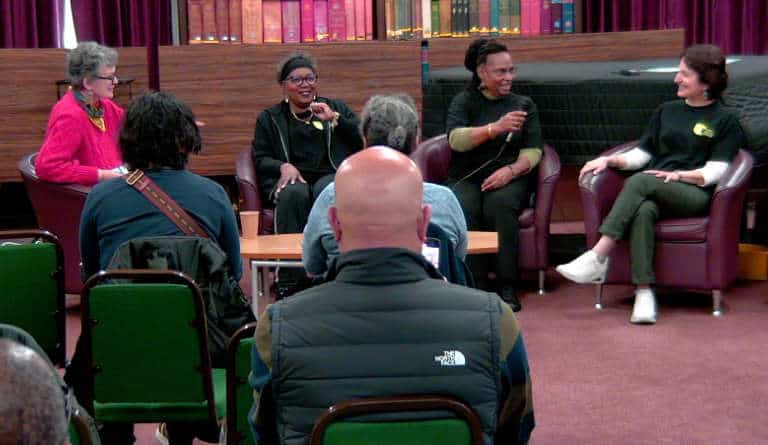
Engage with your audience by including live Q&A sessions, polls, and hashtags. For example, a panel discussion can allow online viewers to ask questions in real time, which narrows the gap between virtual and in person attendees, and it gives you useful moments to clip later.
Daily Recaps
Quick daily summaries keep both your attendees and online viewers engaged. These short videos can highlight a single strong takeaway, a great audience reaction, or a behind the scenes moment, and they often become the most shared pieces because they feel immediate.
Extending Your Event’s Impact: Post-Event Video Content
The event may be over, but the event video marketing opportunities are usually just beginning. This is where you turn footage into a clear story, and where an event recap video can do a lot of heavy lifting for future promotion.
Highlight Reels
A post event highlight reel is your chance to show what the day felt like, not just what happened. Blend memorable moments into a simple narrative, opening energy, key moments, audience response, and a clean finish. If the goal is next year’s ticket sales, this is often the single best asset to create.
Repurposing Content
Maximise the value of your footage by breaking it into smaller, targeted clips. A full length panel discussion can become short insights for social media, and a keynote can become a series of short clips with one clear point each. If you plan this in advance, the edit becomes easier, and the content becomes more consistent.
Thank You Videos
Expressing gratitude goes a long way. A simple thank you video featuring a few strong moments can reinforce the connection with attendees, and it gives sponsors and partners something they can share too.
Leveraging User-Generated Content
Encourage attendees to share their own photos and videos from the event. Their perspective often feels more authentic than a polished shot, and it can complement your main edits nicely, especially if you’re building a library for next year’s promotion.
Replay And Keepsake Video Options
A simple extra that many organisers overlook is offering a modestly priced event recap video replay after the event. If you’ve had roving cameras capturing the room during breaks and intermissions, those natural crowd moments can make the replay feel like a proper keepsake, not just a recording of the stage. The key is to position it as part of your event video marketing, “relive the day”, key moments, audience energy, and the atmosphere in between. Done well, a replay can add a small revenue stream, give sponsors something tangible, and extend the event’s life without taking anything away from the in person experience.
Choosing Your Video Production Approach
Creating event videos doesn’t have to be daunting. Whether you’re a small charity or a growing business, there are options to suit different budgets and different levels of confidence, and both can work if the plan is sensible.
DIY Production
With a smartphone, a basic microphone, and simple editing software, you can create usable content without overspending. If your goal is quick social clips and an event promo video, DIY can be enough, as long as you prioritise clear audio and decent lighting.
Professional Services
For larger events, professional coverage usually pays off because it protects the important parts, audio, camera angles, and a clean edit. If you want help with filming and deliverables, including an event highlight video and cut downs you can actually post, our live event video production services page explains what that typically looks like.
Will Live Streaming Reduce In Person Attendance?
It’s a fair worry, and it comes up a lot. Event organisers put time, money, and reputation on the line, and the last thing anyone wants is a half empty room because people chose to watch from home. Live streaming can reduce attendance if it’s positioned as a cheaper, easier version of the same experience. But it does not have to work that way.
The key is to design the stream so it reaches people who would not have attended anyway, while making the in person option the obvious first choice for anyone who can realistically get there.
Market The Stream To A Different Audience
If your online promotion targets the same people who are within easy travelling distance, some of them will stay home. Instead, push in person tickets locally, and promote online access to people who are geographically distant, overseas, or simply unable to attend on the day. When you separate those audiences, the stream becomes extra reach rather than a replacement seat.
Make The In Person Experience Clearly Richer
An event is not just the stage. It’s networking, side conversations, sponsor areas, workshops, demos, and all the small moments that happen around the schedule. You can be explicit about that difference in your messaging, online viewers get access to the core content, in person attendees get the full experience. That simple framing reduces the “why bother turning up?” problem.
Offer Partial Access Or A Short Delay
If your biggest fear is local people staying home, you can stream selected segments rather than everything, or introduce a modest delay so it feels like access rather than a perfect substitute. You still serve remote viewers, but you protect the sense that being there matters.
Price And Package Online Access Carefully
Free streams are the most likely to pull people away from attendance, because they ask nothing of the viewer. A better approach is to treat online access as its own option, priced for convenience and distance, not as a cheaper ticket. Adding sensible extras can also help, replay access, bonus Q and A, downloadable notes, or a post event session, things that add value for remote viewers without undermining the in person option.
Use Streaming To Build The Next Event
For some organisers, the stream is less about monetising the day, and more about building momentum. It grows your reach, captures registrations, and creates content you can use to sell next year’s tickets. If you follow up properly, the stream can support long term attendance rather than reduce it.
Turn Remote Viewing Into Something Social
A useful middle ground is to encourage watch parties in partner venues elsewhere, coworking spaces, community centres, universities, even a suitable venue in another town. That creates “rooms of people” in multiple places, without competing with the main venue audience.
A Practical Rule Of Thumb
If the stream is marketed as a substitute, it can reduce attendance. If it’s marketed as access for people who cannot attend, and the in person experience is clearly positioned as richer, it usually does the opposite, it expands your reach and strengthens the event.
Best Practices for Event Video Marketing
To maximise the impact of your event video marketing, keep these best practices in mind:
- Set one clear aim for each video, registrations, engagement, or follow up.
- Use consistent branding so people recognise the event quickly.
- Add subtitles where possible, especially for mobile viewing.
- Track performance so you can repeat what works next time.
If you want this handled end to end, filming plus a clean stream plus edits you can actually use, take a look at our event video production and live streaming service.

Very Good Advice. 👍
Thank you for taking the time to read it.