
Every good shoot has a rhythm to it. People arrive, kit comes out, plans change, someone needs a quiet corner, someone else needs a decision, and somehow all of that has to become a finished film that feels calm and watchable.
This page explains how we work on set at Kindfame Productions, and what we ask from clients, contributors, cast, crew, volunteers, interviewees, observers, and anyone else joining us for a filming day. It is not here to make a shoot feel stiff. It is here to make the day easier, safer, and more respectful for everyone involved.
Most of our work is documentary style, corporate documentary, charity video production, behind the scenes filming, testimonial videos, and story led films for organisations. That means we often film real people in real spaces, with real responsibilities happening around us. A few clear expectations at the start make a big difference.
Why Set Etiquette Matters
Filming is a strange mix of concentration and waiting. One minute everything is still, the next minute a room needs to be ready, a line needs to land, a camera has to move, or a contributor needs a bit more time before they speak. Small things matter. A phone vibrating on a table, a door closing at the wrong moment, a person wandering into shot, or a casual comment made near a nervous interviewee can all affect the day.
We try to run relaxed sets, but relaxed does not mean loose. It means people know what is expected, who to ask, where to stand, when to speak, and when to give the room some quiet. That is especially important when we are filming sensitive stories, public facing client work, charity films, or interviews where people are sharing something personal.
Kindfame Productions will usually be responsible for the filming process on the day. If there is a question, disagreement, safety concern, consent issue, or practical problem, speak to the producer or the person we have named as your contact. We would much rather know early than have someone quietly trying to fix something in the background.
The Basics We Ask From Everyone
The first rule is simple, be decent to people. We do not tolerate bullying, racism, sexism, intimidation, unwanted comments, aggressive behaviour, or anything that makes someone feel unsafe or humiliated. A film set only works when people trust the room they are in.
Please arrive at the agreed time, dressed as discussed, and ready for the part of the day you are involved in. If you are delayed, tell your contact as soon as you can. Production schedules can be tight, but real life happens, and it is much easier to adjust when we know what is going on.
When you arrive, check in with the person named in your call sheet, email, or message. Do not assume we have seen you arrive. If you are a contributor, interviewee, actor, volunteer, or client contact, we may need to confirm release forms, consent, wardrobe, refreshments, access needs, or the timing of your part of the shoot.
There can be waiting around. That does not mean nothing is happening. Lighting, sound, camera, access, background activity, and contributor readiness all take time. Please stay patient, stay nearby unless you have checked with someone, and avoid drifting away just as the next setup is ready.
On The Day Of Filming
Phones should be on silent, not just vibrate, when filming is taking place. Sound equipment is sensitive, and a buzzing phone can ruin a take or distract someone during an interview. If you need to take an urgent call, step away and let someone know.
Please do not take photos, video, or behind the scenes clips unless we have agreed it. Some projects involve confidential work, vulnerable contributors, client material, unreleased products, or locations where filming permissions are carefully controlled. If behind the scenes content is useful, we can plan it properly and make sure it does not interrupt the shoot.
Listen to the director, producer, or the person leading the setup. If they ask for quiet, they mean quiet. Whispering can still be recorded. If they ask you to repeat an action, hold a position, pause in a doorway, or wait before moving something, it is usually because continuity, sound, light, or framing depends on it.
Continuity is easy to underestimate. A glass moving from one hand to another, a jacket suddenly zipped up, a chair turned, a prop moved, or someone changing position between takes can cause problems in the edit. If you are not sure whether something should be moved, ask.
If you are being filmed, try not to look at the camera unless you have been asked to. In interviews, we will tell you where to look. In scenes, background action, and observational filming, act naturally and follow the direction you are given. If something goes wrong, do not panic. A calm reset is better than drawing attention to the mistake.
People, Consent And Professional Boundaries
Kindfame often films people who are not performers. They may be staff, founders, service users, volunteers, customers, trustees, patients, parents, young people, or people sharing a story because they believe it will help someone else. That deserves care.
Do not pressure anyone to speak, perform, smile, repeat personal details, or be photographed when they are unsure. If someone looks uncomfortable, tell the producer quietly. If we are filming a charity or community project, safeguarding and dignity come before getting the shot.
Release forms and consent are not admin for the sake of it. They protect the people in the film, the client, and the production. Before you leave, make sure any paperwork or sign off that applies to you has been completed. If you are unsure what you have agreed to, ask before signing.
Practical Expectations
Wear what has been agreed. If we have asked for a certain colour, style, uniform, branded clothing, or spare option, please bring it. Avoid noisy jewellery, heavy logos, tight patterns, and anything that might distract from the story unless it is part of the brief.
Bring anything personal you may need for a long day, water, medication, warm clothing, snacks, reading glasses, chargers, or travel information. Catering depends on the project, location, budget, and schedule, so do not assume lunch is provided unless we have said so. If you have dietary or access needs, tell us before the shoot day where possible.
Please keep the location tidy. Cups, food wrappers, spare wardrobe, bags, cables, coats, and personal belongings can all end up in shot, or become a trip hazard. Put rubbish in the right place, and if there is no obvious bin, take it with you or ask.
Do not move equipment unless you have been asked. A light stand, cable, camera bag, microphone, prop, chair, or small marker on the floor may look casual, but it is probably there for a reason. If something is in your way, tell the crew and they will move it safely.
A Quick Set Checklist
- Arrive on time, or tell your contact early if you are delayed
- Check in when you arrive, so the production team knows you are there
- Keep your phone on silent during filming
- Do not take photos or video unless it has been agreed
- Stay nearby unless someone knows where you have gone
- Listen for direction, especially around quiet, movement and continuity
- Respect contributors, privacy, consent and safeguarding at all times
- Ask before moving anything on set
Before You Leave
Before you head off, check whether you need to sign anything, return anything, confirm your release time, or speak to the producer. This matters for cast, contributors, volunteers, client representatives, and crew. It helps us keep the production record accurate, and it means nobody has to chase simple details afterwards.
If something felt unclear, uncomfortable, rushed, or difficult, tell us. We cannot improve what we never hear about. A good filming day is not just one where we get the footage, it is one where people feel the process was handled properly.
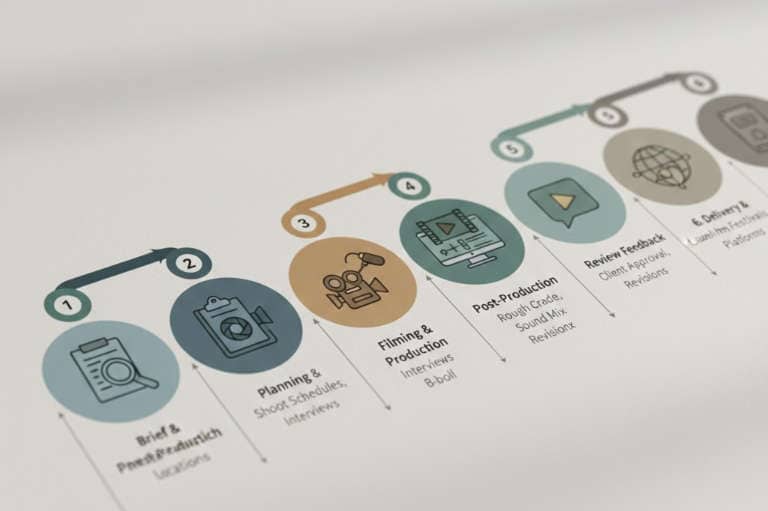
If you are planning a shoot and want to understand the wider production process, our documentary production, behind the scenes video production, and charity video production pages are useful starting points.