For charities, community groups, and small businesses who want a film that feels real, and still does a job.
Why This Format Works
Most people who come to us are busy. They don’t want a complicated process, they just want the finished film to look and sound right, and to feel like them. That’s exactly where documentary style video production works well, it keeps things real while still doing a clear job.
They also need it to work in the real world, on a website, on social media, in a pitch deck, on a fundraising page, or for recruitment.
Our documentary production is for people who need a proper result. Not a glossy advert, not a hype piece, more like something that helps people understand who you are, what you do, and why it matters, without having to read ten pages of text.
“By investing in documentary production you are building an asset for your business.”
That’s why we keep the process clear, with decisions made in the right order, and without endless back and forth.
Curious about what else we do? Our home page has the overview.
If that sounds like what you’re after, the simplest next step is to get in touch via the contact page and tell us what you’re trying to achieve. Even a scrappy message is fine. We can tidy the thinking together.
What We Make (Real Deliverables, Not Vague “Content”)
When people hire a documentary production company, they usually want one of two outcomes, build trust fast, or show impact in a way words can’t. For some teams that looks like business documentary production, for others it’s closer to corporate documentary production or charity storytelling.
Here are common documentary video production formats we produce, with what they’re actually used for:
- Short brand documentary, usually 2 to 5 minutes, ideal for a homepage, an about page, or a landing page where trust is the job
- Mini documentary series, often 3 short films of 2 to 3 minutes each, useful when the story has more than one angle, or you want content you can release over time
- Company story film, a grounded “why we started” piece that avoids the cringe factor, and focuses on credibility and real motivation
- Corporate documentary, case study style films that show the reality of how you work, who you help, and what changes as a result
- Charity documentary film, impact stories designed to support fundraising, awareness, volunteer recruitment, or stakeholder reporting
- Behind the scenes documentary, showing how something is made, delivered, built, repaired, trained, cooked, or prepared, often a strong trust builder
- Customer story documentary, real customer voices, filmed properly and edited with care, so it feels sincere rather than forced
If you already know exactly what you want, great. If you don’t, that’s more common. Creating a documentary is often a discovery process in itself, you start with an intention, then the story sharpens once we understand the audience and the outcome.
What you actually get
When you commission a documentary production, you’re not just getting a single finished film and a goodbye. You’re getting a small set of deliverables that make the project usable across your website and your channels, without you having to figure out the technical bits.
It’s basically everything you need to publish it properly, without you having to think about file formats and platform quirks.
Typically that includes:
- A final master film, exported for your website and YouTube
- A web optimised version that loads quickly and still looks sharp
- A social cut down, usually 30 to 90 seconds, for LinkedIn and Instagram
- Optional extra cut downs in 9:16 for Stories and Reels, and 1:1 for feeds, if that’s part of your plan
- Captions, either supplied as an .srt file or burned in, depending on how you’ll use the film
- Basic sound mixing and clean audio, including removing obvious distractions
- Licensed music, chosen to fit the tone, not to be dramatic for the sake of it
- A small set of still frames pulled from the footage, useful for thumbnails and web images
If you already know where the film will live, for example your homepage, a landing page, a fundraising page, or a recruitment page, tell us early and we’ll shape the versions around that. It’s much easier than trying to force one edit to do every job afterwards.
A Quick Note About The Word “Documentary” (Because It Matters)
People use the word “documentary” in a couple of different ways, and it’s worth clearing that up early because it changes expectations.
Sometimes they mean a traditional, feature length documentary, the kind made for TV, festivals, or streaming, where the story leads and it’s allowed to take its time. Other times they mean a short, honest film that feels real, the kind you’d put on a charity site, a business homepage, a recruitment page, or a campaign landing page.
Most of what we make for organisations, charities, and small businesses is documentary in style. Real people, real places, real story, just shaped into something with a job to do, like building trust, supporting fundraising, helping with recruitment, or showing what your team is really like.
If you do want a stricter documentary approach, issue led, journalistic, community based, we can do that too. It just needs a slightly different conversation upfront about editorial control, fairness, and what can actually be evidenced, so everyone knows what they’re saying yes to.
Who This Is For
This page is for people who want something more meaningful than a standard promo video. It’s for teams who want trust, not just clicks. It’s for organisations who do good work but find it hard to explain it, because the real value is in the nuance, the people, the before and after, the atmosphere. A documentary style film is good at capturing that stuff without forcing it. It’s also for teams who need documentary filmmaking for organisations in plain terms, what to make, why it matters, and where it should be used.
A business documentary works well when you’re trying to shorten the gap between “I’ve never heard of you” and “I think I trust you”. That’s the moment where people either enquire or they disappear. A documentary style film helps because it shows reality, rather than telling people what to think.
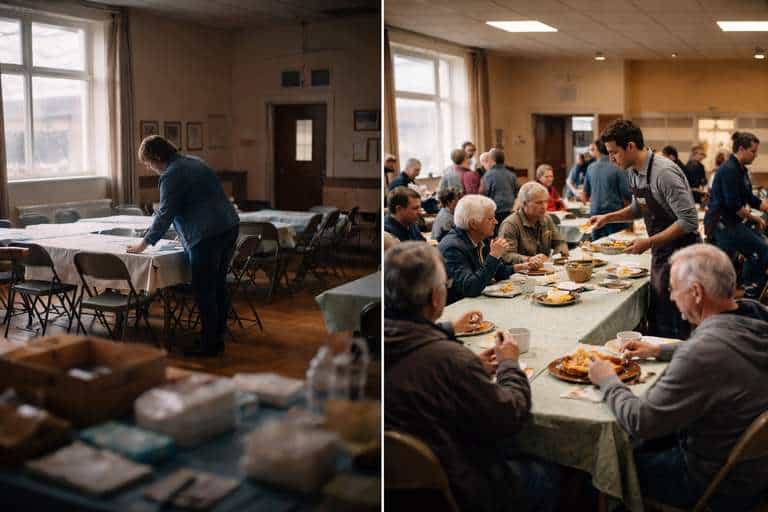
A charity impact film works when you need donors, stakeholders, or volunteers to feel something real, and to understand what their support changes. Not in a dramatic way, just in a human way. For charities, documentaries often become a quiet but powerful fundraising tool, because it gives people something they can share and stand behind.
And sometimes, it’s internal. Culture, recruitment, change projects, even handovers. Documentary style films can be surprisingly useful inside organisations, because people actually watch it, especially when it looks like the real world they’re in every day.
Not For You If…
This is worth saying clearly, because it saves everyone time.
If you want a feature length film, or a TV commission pitch pack only, we’re probably not the right fit here. If you need something ultra low budget, we might not be the right fit, because the compromises show in the finished film. Documentary production takes planning, filming, and editing time, and if that gets squeezed too hard, the film always shows it.
Also, if what you want is a highly scripted, sales heavy video that looks like a documentary but is really just an advert in disguise, you might be better with a traditional promo route. We can do scripted work, but it’s not what this page is built around. Documentary production works best when there’s room for real moments, and a bit of breathing space, otherwise it stops feeling like a documentary and starts feeling like a pitch.
The Process (Calm, Practical, No Drama)
A lot of people assume they need a perfect idea before they talk to a filmmaker. You really don’t. You just need a starting point and a sense of what you want the film to do.
We usually start with a discovery call. It’s not a big performance, it’s just a practical chat to work out the angle. Who’s going to watch it, what do you want them to understand, what do people often get wrong about what you do, and what would make someone trust you a bit faster.
Then we plan the shoot. This is the part that saves time and money later, even if it feels slightly unglamorous. We’ll agree who we need to interview, what locations actually matter, and what “real life” footage we should capture so the film doesn’t end up as a talking head on a chair.
Then we film. Sometimes it’s one day, sometimes more. We keep crews sensible for the job, small when we can, bigger only when it genuinely helps. The aim is to capture what matters without making the day feel awkward for your team.
We edit and send a first cut, you send notes, we do the agreed revision rounds, then we deliver the final versions for website and social so you’re not left with one file that works nowhere. For many projects this includes a short documentary film production version for social, plus a longer website master.
If you’ve already got a deadline, or you know where the film will live, tell us early. It makes everything smoother. If you don’t know yet, that’s fine too, we’ll help you decide based on what the film is meant to achieve.
What We Need From You (So The Project Doesn’t Drag)
This bit isn’t glamorous, but it’s the difference between a smooth project and one that drifts. Documentary production can be quick and calm, but only if a few basics are in place.
First, we need one decision maker for approvals. Not because we’re trying to control the process, it’s just that when three people have equal say, a film can get pulled in three directions and nothing ever quite gets signed off. That’s usually where timelines quietly stretch, even when everyone’s being reasonable.
Second, we need access, to the right people for interviews, or at least permission to film them, and proper access to the location. A workplace, a site, a venue, wherever the story actually happens. Documentary production relies on real access because that’s what gives the film its credibility. If we can’t get near the real thing, the film always feels a bit thin.
And finally, if you’ve got brand guidelines, logo files, or strong preferences around tone or music, it helps to share them early. If you don’t, no problem, we’ll make clean choices that fit the story. The only thing that tends to cause friction is when preferences appear right at the end, when the edit’s already built around a certain feel.
Timescales
We edit and send a first cut, you send notes, we do the agreed revision rounds, then we deliver the final versions for website and social so you’re not left with one file that works nowhere.
Pricing Approach (Clear, Predictable, No Surprise Add-Ons)
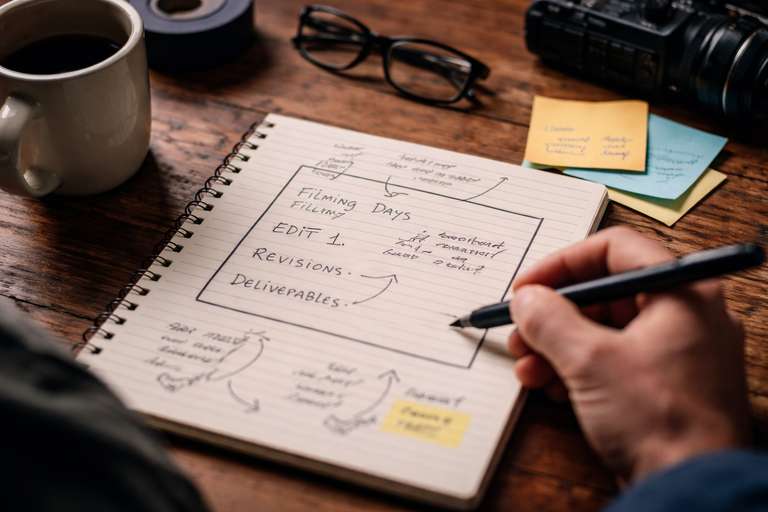
Pricing for documentary production is based on scope. In real terms that usually means filming days, complexity, travel, and
editing time, including how many versions you need and how revision rounds are handled. Once the scope is clear, documentary production is actually pretty predictable cost wise, which is why we make the effort to scope properly rather than guess and then “adjust” later. The same applies whether it’s documentary video production for a campaign piece or a longer trust-led film.
If you prefer fixed packages and predictable costs, we can work that way, as long as the deliverable is clearly defined. For small businesses and charities, that’s often the simplest route because it removes the quiet worry of “how much is this going to creep once we start?” Documentary production feels a lot less daunting when the boundaries are agreed upfront.
If you’re not totally sure what you need yet, that’s fine. We can still quote quickly once we understand the shape of it. You don’t need a full brief, you just need to tell us what the film is for and who needs to watch it. Documentary production starts with intent, not paperwork.
And if what you actually need is a simpler promotional video rather than documentary style, you might prefer our video for small business page. That’s often a more straightforward route for short intro videos and starter projects, and it sits alongside documentary production rather than competing with it.
Examples and Social Proof
This section works best when it’s not overloaded. Three to six strong examples is usually enough, as long as they’re labelled properly. Documentary production is easier to buy when people can see what you mean in real work, rather than trying to imagine it from words.
The label matters more than people think. A visitor should be able to scan and instantly understand, who it was for, what the goal was, and what kind of documentary style it is. Documentary production covers a few flavours, so the labels help people self select.
If you tell me which Vimeo links you want to use, I’ll write the short labels in this same tone, and I’ll keep it honest. No vague “inspiring story” filler. Just clear documentary production examples that show outcomes.
FAQ (Practical Stuff People Always Ask)
For most website use, 2 to 5 minutes is a strong place to start. It’s long enough to feel real, but short enough that people will finish it.
For social, we usually make a tighter cut too, often 30 to 90 seconds, then let the longer film live on your site or YouTube.
Yes. Most projects start with a rough feeling rather than a neat brief, and that’s completely normal.
We’ll ask a few practical questions, audience, outcome, what people misunderstand about you, and what matters most in real life. That’s usually enough to shape a simple angle that’s believable and filmable.
Most projects are interview led, supported by b roll, and a structure we plan upfront. You don’t usually need a word for word script, and it often makes people sound less like themselves.
If you want something more scripted, for example voiceover, we can do that too, we just decide early so the shoot and edit are built for it.
Most projects are around 7 to 10 days for a first edit after filming, depending on complexity and how many versions you need.
If you need it faster, it can sometimes be done if it’s agreed in advance and the schedule allows. The key is planning, rushed edits without planning tend to look rushed too.
Talk To Us About Your Documentary Style Film
If you’re thinking about a documentary style film, or a corporate documentary, or a charity documentary film, the fastest way to get clarity is to talk it through. We’ll help you choose the right format first, then route you to the specific page, so you get the right documentary production plan without overcomplicating it.
Send a message via the contact page and tell us what you want the film to do, who it’s for, and any deadlines you already know about. If you’re unsure on format, say that. It’s not a problem, it’s honestly part of the job.
When you’re ready, contact us and we’ll help you shape it into a plan you can actually say yes to. Then we’ll turn it into documentary style film that looks right, sounds right, and feels true to you.
Contents
- 1 For charities, community groups, and small businesses who want a film that feels real, and still does a job.
- 2 Why This Format Works
- 3 What We Make (Real Deliverables, Not Vague “Content”)
- 4 What you actually get
- 5 A Quick Note About The Word “Documentary” (Because It Matters)
- 6 Who This Is For
- 7 Not For You If…
- 8 The Process (Calm, Practical, No Drama)
- 9 What We Need From You (So The Project Doesn’t Drag)
- 10 Timescales
- 11 Pricing Approach (Clear, Predictable, No Surprise Add-Ons)
- 12 Examples and Social Proof
- 13 FAQ (Practical Stuff People Always Ask)
- 14 Talk To Us About Your Documentary Style Film