
The big benefit of this format is pace and clarity. People get a quick entry point, then if they like what they see, they keep watching. It also gives you content you can release over time, rather than doing one big launch and then going quiet. For mission-led work, a mini documentary series for charities can show impact over time without forcing everything into one emotional peak.
If you’re still deciding what type of documentary production you need, start here, documentary production.
A mini documentary series is a simple idea, you tell one story in a few short chapters, rather than trying to cram everything into one film. Often it’s three films of two to three minutes each, but it can be more, or fewer, depending on the story and how people will watch it.
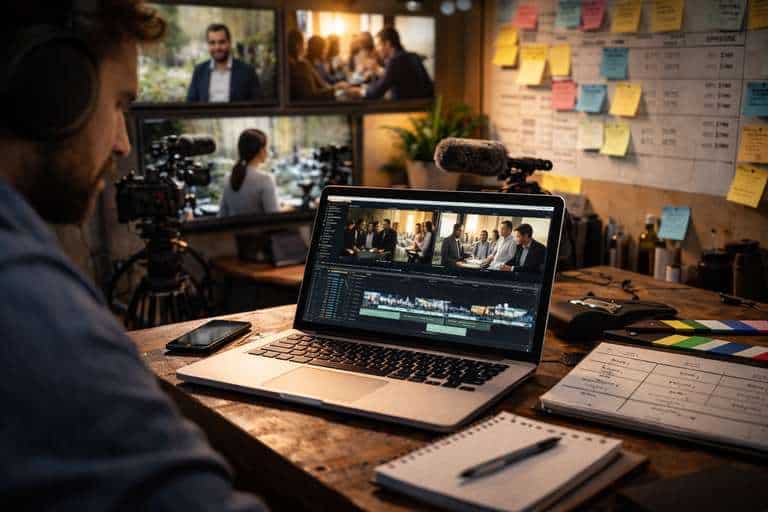
Used well, a mini documentary series for business helps teams explain complex work without overloading one film. To decide what to publish around your mini documentary content, use this list of videos small businesses can use.
What It Is, And Why It Works
An episodic documentary series is not just “a longer film split into parts”. Done well, each episode has a job. One might introduce the problem, one might show how the work happens, one might land outcomes and next steps. It’s still one story, but you let people take it in without effort.
This format works especially well when your story has more than one angle, or when you serve more than one audience. You might need to reassure donors and trustees, while also speaking to service users, partners, or potential customers. A single film often ends up trying to please everyone, and pleasing everyone usually means it becomes a bit vague.
With an episodic format, you can keep each film clean, specific, and watchable. Also, Google and YouTube both tend to like content that keeps people engaged, so releasing a mini documentary series can help you build momentum rather than relying on one big hit. This format also works as a documentary video series you can release in phases, which is often easier for audience retention.
When A Mini Series Is The Right Fit
People usually choose this format when one film would either be too long, too shallow, or too “everything at once”.
- You have a story with distinct chapters, for example problem, process, outcomes
- You want content you can release over time, rather than one single launch
- You need different cuts for different audiences, without stuffing every message into one edit
- Your service or product has a “trust barrier”, and people need to see more than one angle before they commit
- You want a library of assets for web and social, not one film that has to do every job
If what you actually need is one self contained story with more interviews, context, and a clearer narrative arc, you might be better served by a corporate documentary. This format is not “better”, it’s just a different shape.
Structure And Episode Ideas
A classic three part documentary structure is:
- Episode 1, what’s at stake, who it’s for, what problem you’re solving
- Episode 2, how the work actually happens, the real process, the people, the standard
- Episode 3, outcomes, proof, what changes, and what to do next
That’s not the only way, but it’s a reliable one. The important thing is that each episode has one main point. A short documentary series works best when each episode has one clear purpose and one clear audience action. A mini documentary series fails when every episode tries to be “the whole story”. Then you end up with three films that all feel the same.
We’ll usually plan the series around where people will watch. Website visitors often want the “what is this” and “can I trust you” bits first. Social audiences often need a faster hook and clearer payoff, so we’ll build cut downs that still make sense out of context.
Filming Approach, Making It Real Without Making It Awkward
Most series shoots are calmer than people expect. We’re not trying to create drama, we’re trying to capture reality with enough clarity that it lands. That means planning the key moments, keeping crews sensible, and not turning your day into a performance. Good documentary series production depends on planning episode jobs before shooting starts, not just collecting footage. Documentary series filming then becomes more efficient because each shoot block has a defined outcome.
If interviews are part of your series, we’ll keep them grounded. Good documentary interviews feel more like a conversation than a script read. People sound like themselves, and the story stays focused because the prompts are well chosen.
If you want a purely observational approach, no talking heads, this format can still work, but we’ll think harder about what the viewer needs to understand. Sometimes a tiny bit of context, a line of on camera audio, a short voiceover, or even simple captions, helps the whole thing feel intentional.
What You Actually Get
You get a series that’s edited properly, colour corrected, and mixed so it sounds clean. You’ll also get versions built for where the films will live, usually a website friendly landscape set, plus social cut downs sized for the platforms you actually use. Captions file, and burned in subtitles if you want them. We can also provide thumbnails and a few still frames for web use, which is often handy when you’re building landing pages.
Because it’s a series, we’ll also keep continuity in mind. Each film should feel like part of the same world, not three separate projects stitched together.
Common Pitfalls, And How We Avoid Them
- Every episode says the same thing, we plan a clear job for each part of the mini documentary series
- Too much “explaining”, we show the work and let the detail do the credibility building
- It becomes content for content’s sake, we keep the viewer’s questions in mind so the mini documentary series stays useful
- Inconsistent tone and pacing, we edit the mini documentary series as one connected project, not separate edits
Examples (Placeholders For Now)
Add 2 to 4 examples here when you’re ready. Label each one so a visitor can scan quickly:
- Mini documentary series for [Organisation], Episode 1: [Theme], Episode 2: [Theme], Episode 3: [Theme], used on [Landing Page, YouTube, Social]
- Mini documentary series for [Team], filmed over [Days], focused on [Process or Impact], used for [Trust, Recruitment, Stakeholders]
FAQ
Three is a common starting point, because it’s enough to cover problem, process, and outcome. But the series can be two films, or five, or more. The right number depends on how many distinct chapters your story genuinely has, and how people will watch.
Yes, and that’s one of the main reasons people choose this approach. You can publish Episode 1, then follow up with Episode 2 and Episode 3 weekly or fortnightly, which keeps attention and trust building going for longer.
Yes. We’ll supply a website friendly set and shorter cut downs for social. This format often works better than one long film on social, because people can engage in smaller bites and still get the full story across the episodes.
Talk To Us About A Mini Documentary Series
If you’re considering a mini documentary series, send a message via the contact page and tell us what the story is, who needs to watch it, and where you want the films to live. If you already know you want three short films, say that too, it helps us shape the plan fast.
If you’re still weighing up formats, it’s worth starting with our documentary production overview, it’ll help you choose the right shape of film without overthinking it.
Optional swap list, if you want to reduce repetition of the primary phrase: short documentary series, documentary mini series, short form documentary series, three part documentary, episodic documentary content, mini doc films, short documentary films.
Contents
- 1 What It Is, And Why It Works
- 2 When A Mini Series Is The Right Fit
- 3 Structure And Episode Ideas
- 4 Filming Approach, Making It Real Without Making It Awkward
- 5 What You Actually Get
- 6 Common Pitfalls, And How We Avoid Them
- 7 Examples (Placeholders For Now)
- 8 FAQ
- 9 Talk To Us About A Mini Documentary Series