
A Documentary About The Ordinary Acts That Become Quietly Terrifying After A Cardiac Event
What does it take to step back into ordinary life when every protective instinct tells you to hold back?
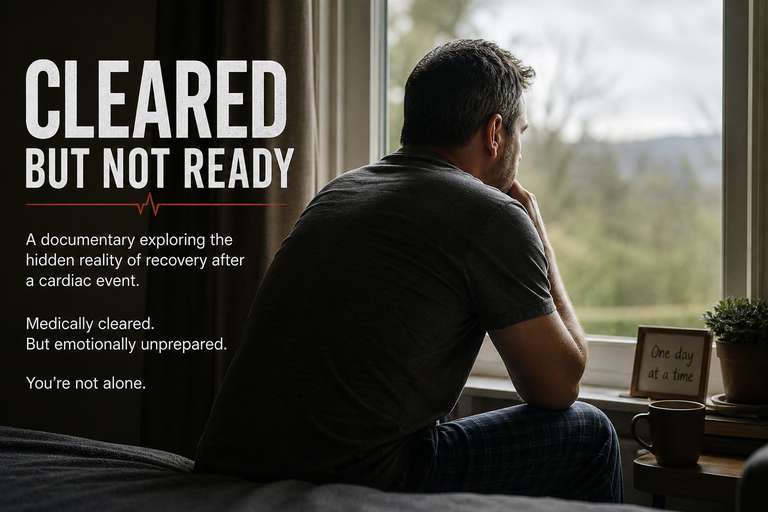
Cleared But Not Ready is a documentary in development about the hidden struggle that can follow a heart attack, bypass surgery, SCAD, stent, valve procedure, or other significant cardiac event, when the immediate crisis has passed, but ordinary life no longer feels ordinary.
Filmed across the uncertain months after discharge, Cleared But Not Ready follows cardiac patients caught between reclaiming life and protecting their bodies, as they attempt the ordinary acts, walking, working, exercising, travelling, that now feel quietly terrifying.
The film is not simply about what happened medically. It is about what happens afterwards, when people are trying to live again while still listening to the instinct that says, be careful.
Why This Documentary Is Being Made
When people talk about cardiac recovery, the focus is often on survival, treatment, medication, rehabilitation and physical progress. Those things matter enormously, but they are not always the whole story.
Many people find that once the immediate crisis is over, a different challenge begins. They may look well from the outside, return home, and be told to start doing more, yet still feel vulnerable, anxious, physically unsure, or cut off from the person they were before.
Cleared But Not Ready is about the conflict between reclaiming life and protecting the body.
One part of a person wants to walk further, return to work, exercise, travel, be with family, and feel like themselves again. Another part still needs to slow down, check symptoms, avoid risk, stay close to safety, and protect a body that has already frightened them once.
That is where the film lives, not in the medical crisis itself, but in the months afterwards, when ordinary life becomes charged with a new kind of fear.
What The Film Is Exploring
The film is being shaped around one central question:
What does it take for someone to step back into ordinary life when every protective instinct tells them to hold back?
We do not assume the answer is simple. It may be time, rehabilitation, family, frustration, necessity, a personal goal, or someone trusted who helps turn advice into action. For some people, confidence may not come before action. It may be rebuilt through action, through small acts of lived evidence.
- a walk completed
- a class attended
- a journey taken
- a day at work managed
- a hobby returned to
- a moment where the body copes, and something inside begins to shift
This is not a medical information site, and it is not being made to promote any service. The aim is to create a serious, honest documentary that makes this hidden side of recovery visible, human and difficult to ignore.
Who We’d Like To Hear From
We are especially interested in hearing from people who are at the early stage of returning to life after a cardiac event.
You may have recently been discharged, recently started cardiac rehabilitation, or recently been told you can begin doing more, walking further, exercising carefully, returning to work, travelling, or rebuilding ordinary routines.
But knowing you can do more and actually feeling able to do it are not always the same thing.
You may still find yourself holding back. You may avoid exertion, stairs, travel, work, social situations, being alone, or anything that makes your heart rate rise. You may look well from the outside, while privately checking symptoms, managing fear, or wondering how far you can safely go.
We would also like to hear from people who are further along in recovery and can look back on that stage clearly, especially if you remember what helped you take action before confidence had fully returned.
You do not need to have a dramatic story. Sometimes the most powerful moments are the ordinary ones, the walk you nearly did not take, the class you almost avoided, the journey that felt bigger than it looked, or the first time you realised you were still protecting your body long after the immediate crisis had passed.
About The Project
Cleared But Not Ready is being developed independently by Kindfame Productions, with the aim of creating a documentary that could eventually be presented to broadcasters and streaming platforms.
At this stage, the project is in development. That means we are speaking to people, listening carefully, and building a truthful picture of what life after a cardiac event can really feel like when the official crisis has passed, but the private struggle is still unfolding.
Some people may only want an informal conversation. Others may be open to taking part more directly later on. There is no pressure, and no expectation. The purpose at this stage is to understand the real story more clearly.
How You Can Get Involved
If this speaks to your experience, the best first step is to complete the short questionnaire below.
The questionnaire helps us understand more about your experience of recovery, especially the gap between knowing what you were told you could do and actually feeling able to do it in real life. It also helps us understand where motivation comes from, what helps people take action, and what ordinary moments might reveal the deeper story of recovery.
Complete the questionnaire here: Cleared but not ready questionnaire
There is no pressure and no obligation. Completing the questionnaire simply lets us understand your story better at this stage.
Medical And Rehabilitation Professionals
Our Cleared But Not Ready team are very interested in hearing from medical professionals, cardiac rehabilitation staff, therapists, researchers, charities and others working in this field who may have a relevant perspective on the space between medical advice and real life after a cardiac event.
We are particularly interested in the question of what helps people move from caution into action. What provides the bridge between being told what is safe and actually feeling able to do it? What role do rehabilitation, encouragement, structure, family, community and personal motivation play?
If you work with cardiac patients and feel you have something valuable to add, whether about recovery, fear, confidence, rehabilitation, behavioural activation, or the hidden emotional side of the journey, you are very welcome to get in touch.
About The Filmmaker
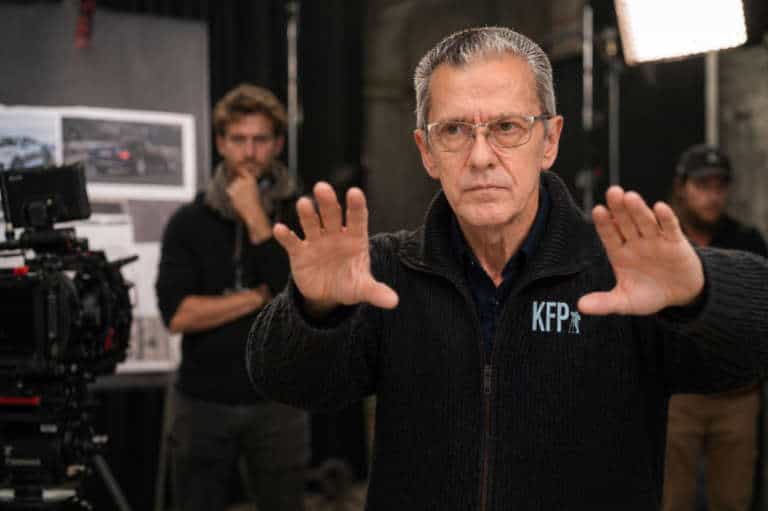
Cleared But Not Ready is being developed by Paul Howard of Kindfame Productions.
Paul Howard is a documentary filmmaker with a strong instinct for stories that reveal what people are really living through once the official version of events has moved on. This project emerged directly from filming a cardiac rehabilitation team, where he found himself hearing the same hidden truth again and again, that people could be treated, discharged, and encouraged to move forward, yet still not feel ready to return to ordinary life.
The repetition of that experience had a profound effect on him. The more he heard it, the more convinced he became that this was the film, not simply a detail within recovery, but the story itself. From that point on, he became deeply committed to making a documentary that would bring this unseen part of cardiac recovery into view with seriousness, honesty, warmth and emotional force.
Research Context
The experiences at the centre of Cleared But Not Ready are personal, but they are not isolated. Research shows that the emotional aftermath of a cardiac event can be significant, and that physical recovery and psychological recovery do not always move at the same pace.
Studies involving heart attack survivors and SCAD patients have reported anxiety, depression, distress, fear, post-traumatic symptoms and a lasting loss of confidence in the body. This matters because being physically stable is not always the same as feeling safe, ready, or able to return to ordinary life.
The research below is included as context for the documentary. It helps explain why fear, uncertainty, loss of trust, and hesitation around movement or exertion can remain part of recovery long after the immediate medical crisis has passed.
Selected Supporting Research
Prevalence and Influencing Factors of Kinesiophobia in Heart Disease Patients
Research on fear of movement after heart disease, relevant to the way some people avoid exertion or ordinary activity even when they have been encouraged to begin doing more.
Prevalence of Anxiety, Depression, and Distress in SCAD and Non-SCAD AMI Patients
A comparative study looking at anxiety, depression and distress in SCAD and non-SCAD heart attack patients, and the need for psychological support in rehabilitation.
Patient-Reported Psychological Distress After Spontaneous Coronary Artery Dissection
A study focused on psychological distress and post-traumatic symptoms after SCAD, showing how deeply the experience can affect survivors beyond the immediate event.
Psychosocial and Lifestyle Impacts of Spontaneous Coronary Artery Dissection
A wider paper on the psychosocial and lifestyle impact of SCAD, including uncertainty, anxiety and the continuing need for support.
Effectiveness of Psychological Interventions in Reducing PTSD, Anxiety and Depression in Post-Myocardial Infarction Patients
A systematic review and meta-analysis on psychological interventions after heart attack, including approaches aimed at reducing PTSD symptoms, anxiety and depression.
Prevalence of Depression, Anxiety and Post-Traumatic Stress Disorder After Acute Myocardial Infarction
A review on depression, anxiety and post-traumatic stress after acute myocardial infarction, reinforcing that survival is only one part of recovery.
Questions People May Have About Cardiac Recovery
Emotional recovery after a heart attack can involve learning to trust your body again, making sense of what has happened, and finding a way back into ordinary life. For some people, this part of recovery continues long after the immediate medical crisis has passed.
Cardiac recovery anxiety can affect people in different ways. Some become very alert to symptoms, some worry about exertion, and others feel uncertain about what is safe. Cleared But Not Ready is interested in this less visible part of recovery, where reassurance does not always remove the instinct to protect the body.
Life after a cardiac event can feel very different from the outside version of recovery. Someone may look well, return home, and begin doing ordinary things again, while still feeling cautious, vulnerable, or unsure how far they can safely go.
Fear of exercise after heart attack can happen when movement, raised heart rate, breathlessness or ordinary bodily sensations become associated with danger. This documentary is exploring what helps people move from protecting the body into carefully reclaiming life.
Yes. We are interested in heart attack survivor stories, as well as experiences after bypass surgery, SCAD, stents, valve procedures and other cardiac events. The project is especially focused on people who found that returning to ordinary life was more complicated, emotional or frightening than others may have realised.
Get In Touch
If you would like to ask a question about Cleared But Not Ready, share a relevant perspective, or speak to us before completing the questionnaire, you are welcome to get in touch.
We are especially interested in hearing from people with lived experience of recovery after a cardiac event, as well as cardiac rehabilitation teams, clinicians, therapists, researchers, charities and support groups who understand this part of the journey.
At this stage, getting in touch does not commit you to taking part in the documentary. It is simply a way to start a conversation and help us understand whether your experience or professional insight may be relevant to the project.
You can contact Kindfame Productions using the form below.